
by Anna, The Sporting Mom
Yes, one of these is worth buying if you spend more than an hour a week on metal or wood bleachers — and for most sports parents a simple cushion is the sweet spot, while anyone sitting through long tournaments or double-headers usually ends up happier with a folding bleacher chair that has back support. Both solve the same problem, which is hard, cold, narrow bleacher seating that turns a two-hour game into a two-hour ache in your tailbone. Pick the wrong one, though, and you’re either lugging around more gear than you need or still squirming by the third inning.
I found this out the slow way, sitting directly on aluminum bleachers through an entire fall soccer season with nothing under me but a folded-up sweatshirt. My younger son plays soccer and my older one plays baseball, so between the two I’m on some bench most weekends from March through November, and eventually my back made the decision for me.
Cushion or Bleacher Chair — What’s the Real Difference?
It comes down to how much structure you want between you and the bench. A stadium seat cushion is just a flat, padded pad, usually foam inside a nylon or vinyl shell, that sits directly on the plank. Some, like the Coleman Portable Stadium Seat, have a low ribbed back panel, but there’s no real frame. They’re light, cheap, and disappear into whatever bag you’re already carrying.
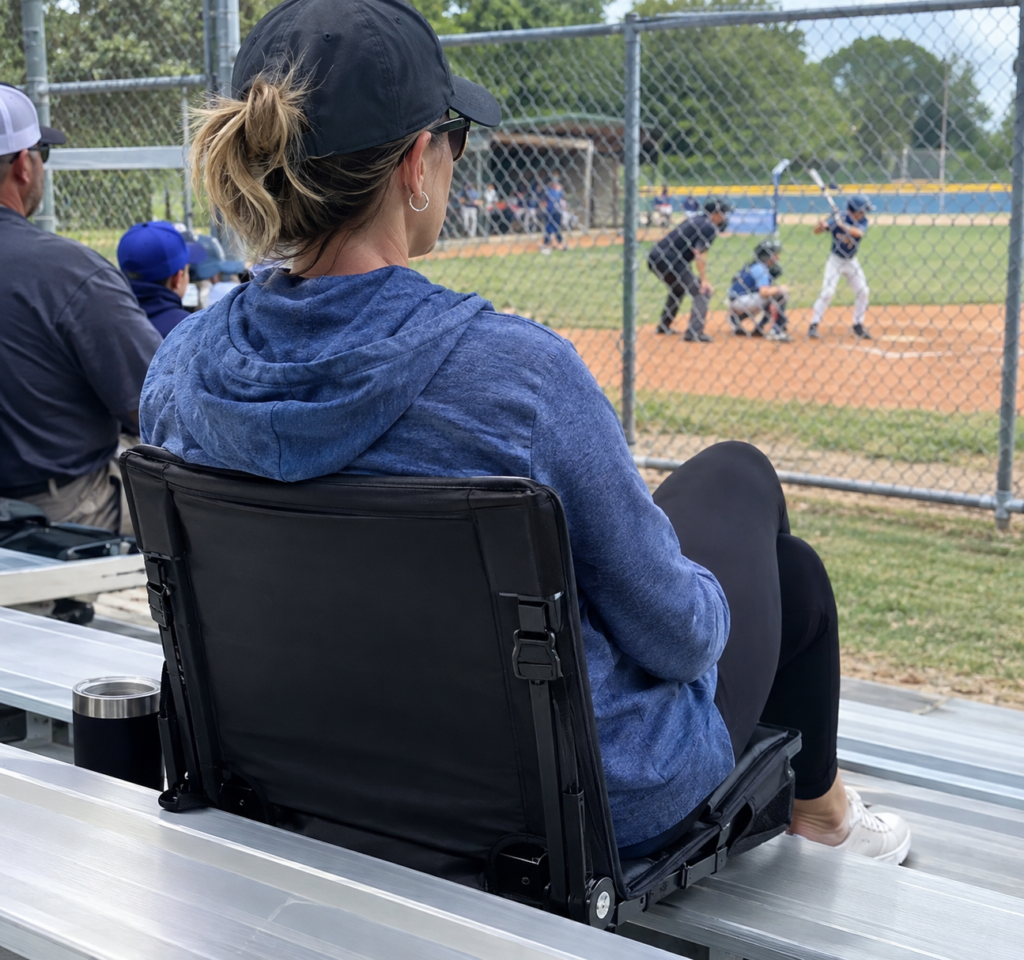
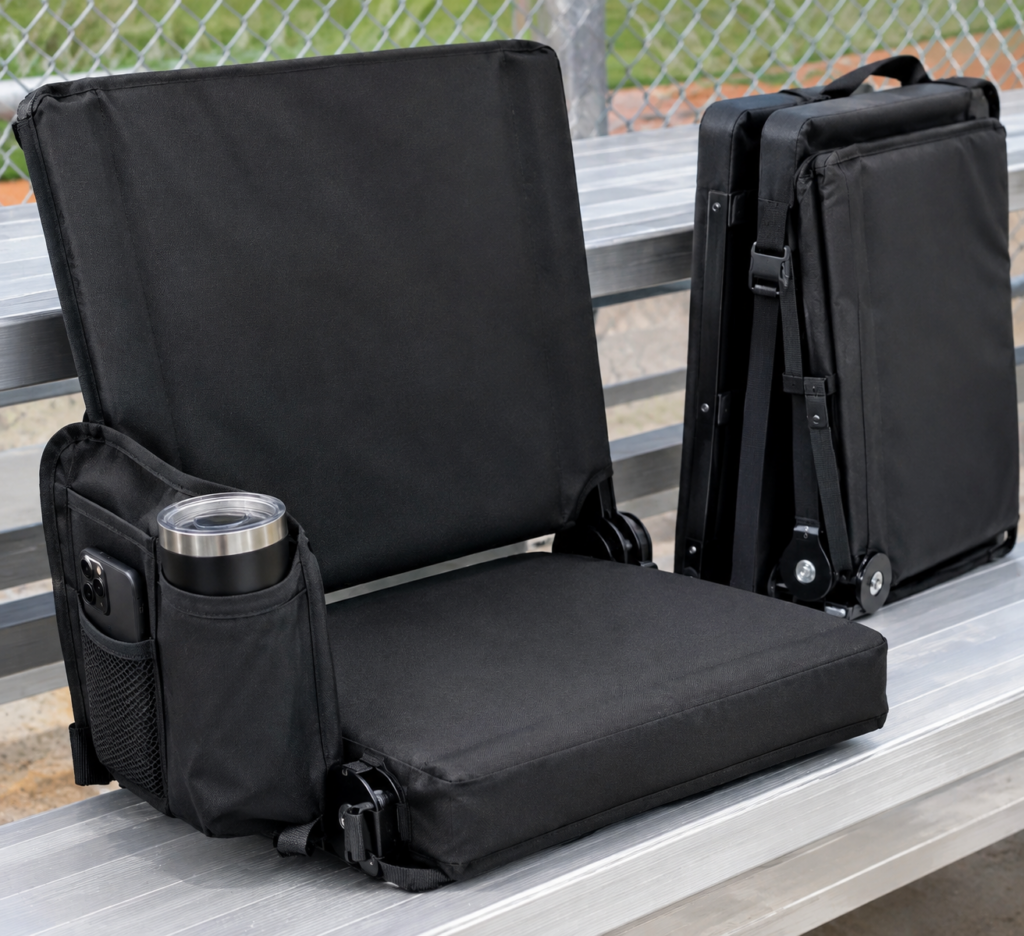
A bleacher chair with back support is closer to a mini folding chair. It has a rigid or semi-rigid frame, a raised back panel, sometimes armrests, and it usually hooks onto the bleacher bench so it doesn’t slide out from under you mid-game — not a fun surprise, and I speak from experience. Popular versions include the Rio Gear Bleacher Boss Pal, the Flash Furniture Grandstand Comfort Seat, and the Sportneer Stadium Seat, which reclines through several positions. There’s also a middle option: backpack-style folding chairs like the Oniva Portable Ventura Seat, which fold down with shoulder straps and give you full back support plus armrests, more like a camp chair.
Do You Actually Need a Chair, or Is a Cushion Enough?
I get asked this a lot by other soccer moms standing next to me at practice, and it depends on your schedule more than your comfort preferences. If most games run an hour or less, if the bleachers already have some kind of back rail, or if you’re buying for more than one kid or parent and want something cheap enough to grab a few of, a basic cushion covers it without much thought.
Where a cushion falls short is tournament weekends. If you’re sitting through meets or double-headers running three-plus hours, regularly parked on backless aluminum with nothing to lean against, or you’d like a cup holder and a pocket for your phone within reach, a bleacher chair earns its keep. It’s one more item to remember, but by hour three of a Saturday tournament, nobody who owns one is complaining about the extra bag.
What Actually Separates a Good One From a Waste of Money
A few features tend to separate the ones people keep using for years from the ones that quietly end up in the garage.
Padding thickness matters more than I expected. Cushions and chair seats both range from about 1.5 to 3 inches of foam, and while thicker isn’t automatically better if it makes the thing too bulky for your bag, anything under 1.5 inches starts to feel more like a placemat than a cushion by the second period.
Straps or hooks are what keep a bleacher chair from sliding around on aluminum seating. Look for hooks that clip over the bench in front of you, the way the Rio Gear and Flash Furniture models do. Skip this feature and you’ll spend half the game re-adjusting instead of watching your kid.
Water resistance is non-negotiable in my experience. Morning dew and damp bleachers are just a fact of youth sports — I’ve shown up to 8 AM games where the seats were still wet from overnight. Nylon or polyester shells with a water-resistant coating, which most of the models above use, wipe clean in seconds; cloth or canvas ones soak through and stay damp for the rest of the game.
Weight capacity and width matter if more than one person might end up using it, or if you just want elbow room. Some of the wider chair options are built specifically for that, with frames rated well above the standard 250-pound mark.
Cup holders and pockets aren’t essential, but on something you’re hauling to every single game anyway, having a built-in spot for a water bottle and your phone is one of those small things you don’t appreciate until it’s not there.
Will It Actually Fit in Your Bag?
This is the question that trips people up, so here’s the honest answer instead of the marketing one. Cushions fold or roll flat and genuinely tuck into a tote, backpack, or even a large purse — the Coleman roll-up style and similar foam cushions are the most travel-friendly option in this whole category, built to be the kind of thing you grab without thinking on the way out the door.
Bleacher chairs fold, but they don’t disappear the way cushions do. Most collapse to something like a thick laptop bag or a small duffel, around 3 to 5 inches thick, usually with a carry strap built in. That’s fine walking from the car to the field, but it’s not squeezing into an already-full sports bag alongside cleats and water bottles. Plan on a separate hand for it. If you’re already carrying a chair anyway, folding stadium seats with a lightweight aluminum frame, like the Cascade Mountain Tech Folding Stadium Seat at under 6 pounds, tend to be the easiest of the “real chair” options to carry any real distance.
What I’d Actually Tell You to Buy
For most weekly practices and regular-season games, a cheaper foam cushion covers what you need without giving you one more thing to remember on a Tuesday scramble out the door. For tournament weekends, all-day meets, or bleachers with zero back support, spending a little more on a folding bleacher chair pays off by your fourth game of the day. I ended up doing what a lot of parents I sit with eventually do: one decent cushion that lives in my everyday bag, and a folding chair that stays in the trunk for tournaments, so I never have to choose between the two